

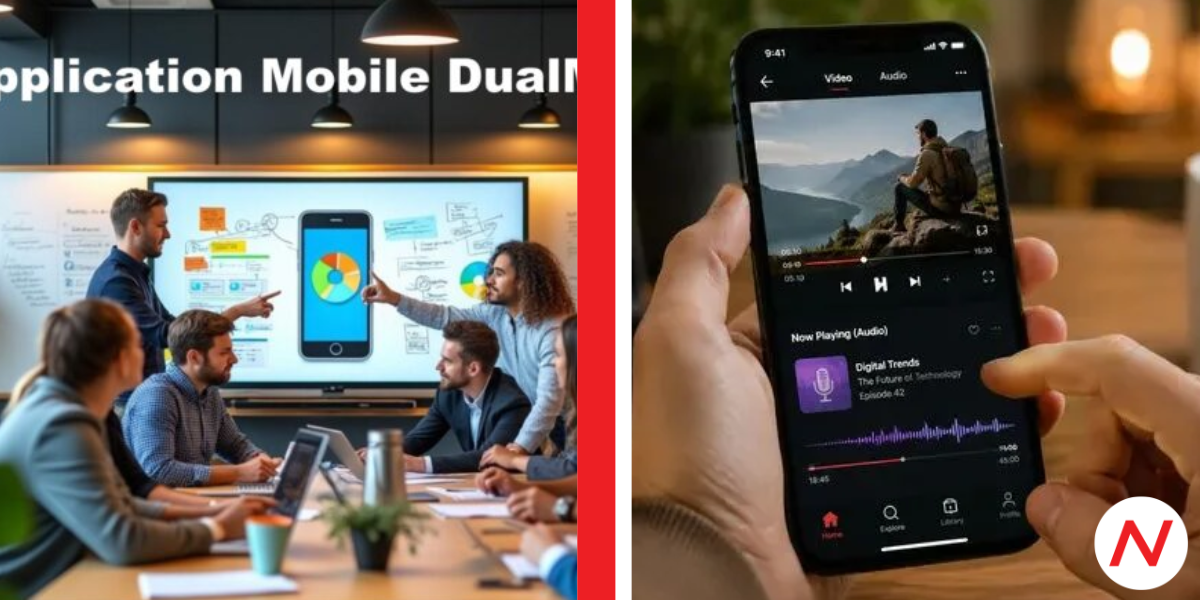
Mobile applications have become central to how people consume content, manage work, and interact with digital platforms. One growing concept in this space is Application Mobile DualMedia, a type of mobile solution designed to combine multiple forms of media into a single unified experience. Instead of separating video, audio, text, and interactive tools into different apps, DualMedia brings everything together.
This approach helps users stay engaged without switching platforms. It also improves convenience for businesses that want to deliver richer digital experiences. In today’s fast-moving mobile ecosystem, this model is becoming increasingly relevant for education, entertainment, marketing, and business applications.
Quick Bio
| Category | Details |
|---|---|
| Name | Application Mobile DualMedia |
| Type | Mobile Application Concept |
| Industry | Technology / Mobile Development |
| Core Idea | Multi-media integration: audio, video, text, images |
| Purpose | Unified digital experience |
| Year Concept Popularity | 2018–Present, modern digital trend |
| Age | Not applicable, non-human concept |
| Height | Not applicable |
| Net Worth | Not applicable, technology concept |
| Founder | Not a single person; used by multiple agencies/companies |
| Usage | Apps, business platforms, education, entertainment |
| Key Feature | Multi-format media handling in one app |
| Popular In | Mobile development, digital publishing, streaming apps |
| Social Presence | Mentioned by tech agencies and blogs |
What is Application Mobile DualMedia
Application Mobile DualMedia refers to a mobile application that integrates multiple media formats such as video, audio, images, text, and interactive elements within one system. The goal is to create a seamless digital experience where users can consume and interact with different content types without leaving the app environment.
According to modern app development trends, DualMedia apps are built to enhance engagement and simplify access to content. Instead of fragmented experiences, users get a unified interface where everything is accessible in one place.
In simple terms, it is a multi-format mobile application system designed for richer user interaction and smoother content delivery across devices.
How Application Mobile DualMedia Works
A DualMedia application works through a layered system that ensures smooth performance and content delivery. The structure generally includes a frontend, backend, and media processing layer, each playing a specific role in user experience.
The frontend is what users interact with. It includes the interface, buttons, media players, and navigation system. The backend handles data storage, authentication, user profiles, and application logic. The media layer processes video, audio, and images for smooth playback and optimized performance.
Together, these layers allow users to stream content, read information, and interact with features in real time without lag or disruption.
Key Features of Application Mobile DualMedia
One of the strongest aspects of DualMedia applications is their versatility. They are designed to support multiple media formats simultaneously, offering a rich and flexible experience for users.
These apps often include video streaming, audio playback, image galleries, and text-based content in one platform. Users can switch between formats without losing context. This improves usability and engagement significantly.
Another key feature is personalization. Many DualMedia apps use behavioral tracking to recommend content based on user preferences. Push notifications and offline access further enhance convenience and usability.
Types of Application Mobile DualMedia
DualMedia applications can be found across different industries, each using the concept in unique ways. In entertainment, they support video streaming platforms and multimedia sharing apps. In education, they power e-learning systems that combine video lessons, notes, and quizzes.
In business environments, DualMedia apps are used for dashboards, reporting tools, and communication systems. News and media platforms also rely heavily on this structure to combine articles, videos, and live updates in one interface.
E-commerce apps are another major category, using DualMedia to combine product images, videos, and descriptions for better user engagement.
Benefits of Application Mobile DualMedia
The biggest advantage of DualMedia applications is improved user experience. By combining multiple media formats, users no longer need to switch between apps to access different types of content.
This leads to higher engagement, longer usage time, and better retention rates. Users also benefit from personalized content recommendations, which make the experience more relevant and efficient.
For businesses, the benefits are even more significant. These apps increase brand interaction, improve conversion rates, and open multiple revenue channels such as subscriptions, ads, and in-app purchases.
Technology Behind Application Mobile DualMedia
DualMedia applications rely on modern mobile development technologies. Frameworks like Flutter and React Native are commonly used for cross-platform development, while Swift and Kotlin are used for native iOS and Android applications.
On the backend side, technologies like Node.js, Python, and Firebase are often used to manage data and logic. Media processing tools like FFmpeg help handle video and audio compression and streaming.
Cloud services such as AWS and Google Cloud ensure scalability, allowing apps to handle large amounts of users and data efficiently.
Development Process of DualMedia Applications
Building a DualMedia application involves several structured stages. The process begins with planning and requirement analysis, where developers define the purpose, target audience, and core features of the app.
Next comes UI/UX design, where interfaces are created for smooth navigation and user-friendly interaction. After that, developers build the frontend and backend systems while integrating media functionalities.
Testing ensures that the app runs smoothly across different devices and conditions. Once finalized, the app is launched on platforms like Google Play and Apple App Store, followed by continuous updates and maintenance.
Cost of Application Mobile DualMedia
The cost of developing a DualMedia mobile application depends on complexity, features, design requirements, and platform selection. Simple apps may cost significantly less, while advanced platforms with streaming, AI integration, and real-time features can be expensive.
On average, development costs can range from basic budgets for small applications to high-end enterprise-level investments for large-scale systems. Maintenance, hosting, and updates also contribute to long-term costs.
Businesses typically invest more in DualMedia apps because of their ability to generate higher engagement and revenue.
Challenges of Application Mobile DualMedia
Despite its advantages, DualMedia development comes with challenges. One major issue is performance optimization, especially when handling large media files like videos and high-resolution images.
Storage requirements can also become significant, requiring cloud-based solutions for scalability. Another challenge is ensuring compatibility across different devices and operating systems.
Security is also a major concern, as apps must protect user data and media content from unauthorized access or breaches.
Future of Application Mobile DualMedia
The future of DualMedia applications is closely tied to advancements in artificial intelligence, augmented reality, and faster mobile networks like 5G. These technologies will make apps more interactive, intelligent, and immersive.
AI will help personalize content more accurately, while AR and VR will introduce new ways of interacting with media. Faster connectivity will also improve streaming quality and reduce loading times significantly.
As digital consumption continues to grow, DualMedia apps are expected to become a standard in mobile development.
Real-World Use Cases
DualMedia applications are already widely used across multiple industries. Streaming platforms use them to combine video and audio content. Educational apps use them for interactive learning experiences.
Business applications use DualMedia systems for reporting dashboards and internal communication tools. Social media platforms also rely on mixed-media formats to increase engagement and user interaction.
These real-world applications show how versatile and practical the concept has become.
Profile & Personal Attributes (Not Applicable Section)
Application Mobile DualMedia is a technology concept, not a person or celebrity, so attributes like age, height, family background, net worth, physical appearance, or social media profiles do not apply.
However, if we treat DualMedia as a “digital concept profile,” it can be summarized as follows:
- Age: Not applicable (concept, not a human entity)
- Height: Not applicable
- Family: Not applicable
- Net Worth: Not applicable (but market value depends on applications built using this model)
- Physical Appearance: Not applicable
- Social Media: Exists only as references through companies or platforms using the concept
- Fun Facts: It combines multiple media formats into one app, reduces app switching, and improves digital engagement efficiency
This section clarifies that DualMedia is purely a software architecture and application model, not a personal identity.
Conclusion
Application Mobile DualMedia represents a modern evolution in mobile app development. It focuses on combining multiple media formats into a single, seamless experience that improves usability, engagement, and efficiency.
From entertainment and education to business and e-commerce, its applications are widespread and growing rapidly. As technology continues to advance, DualMedia systems are expected to become even more powerful and integrated into everyday digital life.
In a world where users demand simplicity and richness at the same time, DualMedia provides a balanced solution that meets both needs effectively.
Must Read: Liz Kreutz Age and Full Biography: Career, Family, and Life Story
FAQs
What is Application Mobile DualMedia?
Application Mobile DualMedia is a mobile app system that combines different media types like video, audio, images, and text in one platform. It helps users interact with multiple formats without switching between different apps.
How is DualMedia different from a normal mobile app?
A normal mobile app usually focuses on one function, such as messaging or video streaming. DualMedia apps combine several functions together, creating a more complete and interactive digital experience.
Who can use Application Mobile DualMedia?
It can be used by businesses, educators, content creators, and entertainment platforms. Anyone who wants to deliver mixed media content in one app can benefit from this model.
Is Application Mobile DualMedia expensive to build?
The cost depends on features, design complexity, and platform choice. Simple apps are more affordable, while advanced apps with streaming, AI, or cloud systems require higher budgets.
What is the future of Application Mobile DualMedia?
The future is strong due to AI, 5G, and AR technologies. These improvements will make DualMedia apps faster, smarter, and more interactive for users worldwide.